
What Your Chimney Is Trying to Tell You Before It Becomes a Fire Hazard
Most chimney problems don’t begin with dramatic warning signs. They develop gradually through moisture, creosote buildup, aging masonry, and years of normal fireplace use. By the time smoke begins backing into the room or visible damage appears, the underlying issue has often been developing for months or even years.
For homeowners in Haddon Heights and throughout Camden County, recognizing the early warning signs can help prevent costly repairs and reduce the risk of chimney fires. Knowing when to monitor a problem and when to stop using the fireplace altogether is one of the most important parts of responsible home maintenance.
Why Older Haddon Heights Homes Need Extra Attention
Many homes throughout Haddon Heights, Barrington, Haddonfield, and neighboring communities were built decades ago using traditional masonry chimneys lined with clay tile.
Over time, these systems experience:
- Freeze-thaw damage
- Moisture intrusion
- Mortar deterioration
- Creosote accumulation
- Aging chimney liners
Annual inspections remain the best way to identify these issues before they become significant structural problems.
Warning Signs You Should Never Ignore
A Strong Smoky Odor When the Fireplace Isn’t Being Used
If your fireplace produces a noticeable smoky smell during warm weather or while it’s sitting idle, excessive creosote buildup or airflow problems may be present. Persistent odors should be professionally evaluated before the fireplace is used again.
Black, Shiny Residue Around the Fireplace
Sticky black residue around the firebox opening often indicates advanced creosote buildup. Unlike light soot, hardened creosote is highly combustible and typically requires specialized removal methods beyond routine sweeping.
White Staining on the Chimney Exterior
White powdery deposits, known as efflorescence, indicate moisture moving through the masonry.
Although the staining itself is not dangerous, it often signals:
- Water penetration
- Cracked chimney crowns
- Deteriorating mortar joints
Addressing moisture problems early helps prevent more extensive masonry damage.
Pieces of Tile or Brick Inside the Fireplace
Finding clay tile fragments or masonry debris inside the firebox may indicate deterioration of the chimney liner. Damaged liners can allow excessive heat and combustion gases to escape into surrounding structures. If this occurs, discontinue fireplace use until the chimney has been inspected.
Smoke Entering the Living Room
Some smoke during initial fire startup may occur under certain weather conditions. However, continuous smoke entering the room during normal fireplace operation should never be ignored.
Possible causes include:
- Chimney blockages
- Damper problems
- Draft issues
- Flue damage
Professional diagnosis is recommended before further use.
Cracking or Popping Sounds from the Chimney
Loud cracking sounds coming from the chimney structure rather than the burning wood may indicate movement within damaged masonry or chimney components. Any unusual structural noises should be investigated promptly.
Deteriorating Mortar Joints
Using binoculars from the ground, homeowners can often spot:
- Missing mortar
- Crumbling joints
- Loose bricks
These conditions allow moisture to enter the chimney and gradually weaken its structural integrity.
Rust Around the Damper
Surface rust can be normal over time. However, severe corrosion, a damper that won’t operate properly, or visible gaps when closed often indicate ongoing moisture problems inside the chimney.
Animal Activity
Birds, squirrels, raccoons, and other wildlife frequently enter uncapped chimneys.
Signs include:
- Scratching sounds
- Chirping
- Nesting debris
- Reduced draft
Animal nests can obstruct airflow and increase fire hazards.
Professional removal is often necessary.
More Than One Year Since the Last Inspection
Even without visible warning signs, annual inspections remain one of the most effective ways to detect hidden chimney problems before they become expensive repairs.
What Happens During a Professional Chimney Inspection?
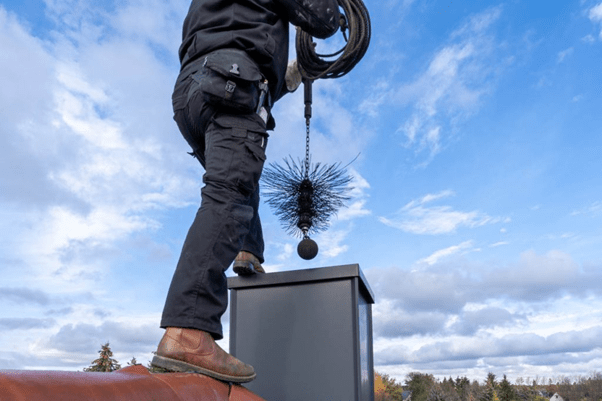
A professional chimney inspection includes much more than simply cleaning the flue.
Depending on the inspection level, technicians evaluate:
- Firebox condition
- Chimney liner
- Smoke chamber
- Damper operation
- Chimney crown
- Chimney cap
- Masonry condition
- Creosote accumulation
- Overall system safety
When additional evaluation is needed, specialized video equipment may be used to inspect the full interior of the flue.
Typical Chimney Service Costs
While every home is different, homeowners in Haddon Heights and surrounding Camden County communities can generally expect:
| Service | Typical Cost |
|---|---|
| Chimney Sweep & Level 1 Inspection | $150–$300 |
| Level 2 Camera Inspection | $250–$500 |
| Chimney Liner Repair | $1,500–$5,000 |
Actual pricing depends on chimney height, accessibility, condition, and the extent of any necessary repairs.
Don’t Wait Until Winter
Many homeowners wait until temperatures drop before thinking about chimney maintenance. Unfortunately, that’s also when appointment availability becomes limited and repairs become more difficult to schedule. Having your chimney inspected before the heating season allows time to address any issues safely before the fireplace returns to regular use.
Frequently Asked Questions
How often should my chimney be inspected?
Annual chimney inspections are recommended for any fireplace or chimney system that is regularly used.
What causes a smoky smell when the fireplace isn’t being used?
Persistent smoky odors often result from creosote buildup, airflow issues, or moisture inside the chimney system and should be professionally evaluated.
What is efflorescence on a chimney?
Efflorescence is the white powdery staining caused by water moving through masonry and leaving mineral deposits behind. It usually indicates excess moisture within the chimney.
When is a Level 2 chimney inspection needed?
Level 2 inspections are commonly recommended after purchasing a home, following a chimney fire, after appliance changes, or whenever hidden damage is suspected.
How much does chimney cleaning cost in Haddon Heights?
Most standard chimney sweeping and Level 1 inspections range from $150 to $300, depending on the chimney’s condition and accessibility.
Schedule Your Free Chimney Inspection
Protecting your fireplace begins with understanding its condition. Whether you’ve noticed unusual odors, visible masonry damage, or simply can’t remember your last inspection, having your chimney evaluated now can help prevent much larger repairs later.
Contact Haddon Heights Chimney today to schedule your free inspection consultation.
Our services
Chimney Sweep Cleaning Repair Haddon Heights NJ in Haddon… · Chimney Services in Mount Ephraim, NJ · Chimney Services in Pennsauken, NJ · Chimney Services in Cherry Hill, NJ · Chimney Services in Collingswood, NJ · Chimney Services in Haddonfield, NJ
Areas we serve
Haddon Heights, NJ · Barrington, NJ · Glendora, NJ · Magnolia, NJ · Haddon Heights, NJ · Haddon Heights, NJ · Haddon Heights, NJ