
What to Look for Before Hiring Someone to Install Your Chimney Cap in Haddon Heights
A chimney cap isn’t something most homeowners think about until a problem appears. Maybe rainwater starts dripping into the fireplace after a storm. Maybe you hear birds or squirrels inside the chimney. Or perhaps a routine inspection reveals that the old cap has rusted through or blown off entirely.
Whatever brings your attention to it, choosing the right contractor matters just as much as replacing the cap itself. A poorly installed chimney cap can allow water intrusion, create draft problems, or fail after only a few seasons. Taking a little extra time to hire a qualified professional can prevent much larger repair bills later.
If you live in Haddon Heights, Barrington, Haddonfield, or anywhere in Camden County, here’s what to look for before hiring someone to install your chimney cap.
Why Your Chimney Cap Matters
Although it’s one of the smallest parts of your chimney system, the chimney cap performs several important jobs every day.
A properly installed cap helps:
- Keep rain and snow out of the flue
- Prevent birds, squirrels, and other animals from nesting inside
- Reduce debris such as leaves and twigs entering the chimney
- Minimize downdrafts that push smoke back into the home
- Help protect the chimney liner and masonry from moisture damage
Without a cap, water enters the chimney every time it rains. Over time, that moisture can damage mortar joints, crack clay flue liners, rust metal components, and shorten the lifespan of the entire chimney system.
In South Jersey, where freeze-thaw cycles are common throughout the winter, keeping water out of the chimney is one of the best ways to avoid costly masonry repairs.
Look for Proper Certifications
One of the first questions to ask any chimney contractor is whether the technician performing the work is CSIA Certified.
The Chimney Safety Institute of America (CSIA) certifies chimney professionals who have completed industry training and passed examinations covering inspection, cleaning, maintenance, and safety standards.
Certification demonstrates that the technician has received specialized education rather than simply offering chimney services as a side business.
If your fireplace includes a gas insert or factory-built appliance, it’s also worth asking whether the technician holds National Fireplace Institute (NFI) certification.
Verify Contractor Registration and Insurance
In New Jersey, home improvement contractors should be properly registered with the state.
Ask for the company’s:
- Home Improvement Contractor (HIC) registration number
- General liability insurance
- Workers’ compensation insurance
A reputable contractor should have no hesitation providing this information.
Insurance is especially important because chimney work involves ladders, rooftops, and elevated work areas. Proper coverage protects both the homeowner and the contractor if an accident occurs.
Questions to Ask Before Hiring
A quality contractor should welcome questions before beginning any work.
Some of the most important include:
Is the technician who will perform the installation CSIA certified?
Company certifications aren’t enough. Ask whether the person climbing onto your roof holds the certification.
What type of chimney cap do you recommend?
Every chimney is different.
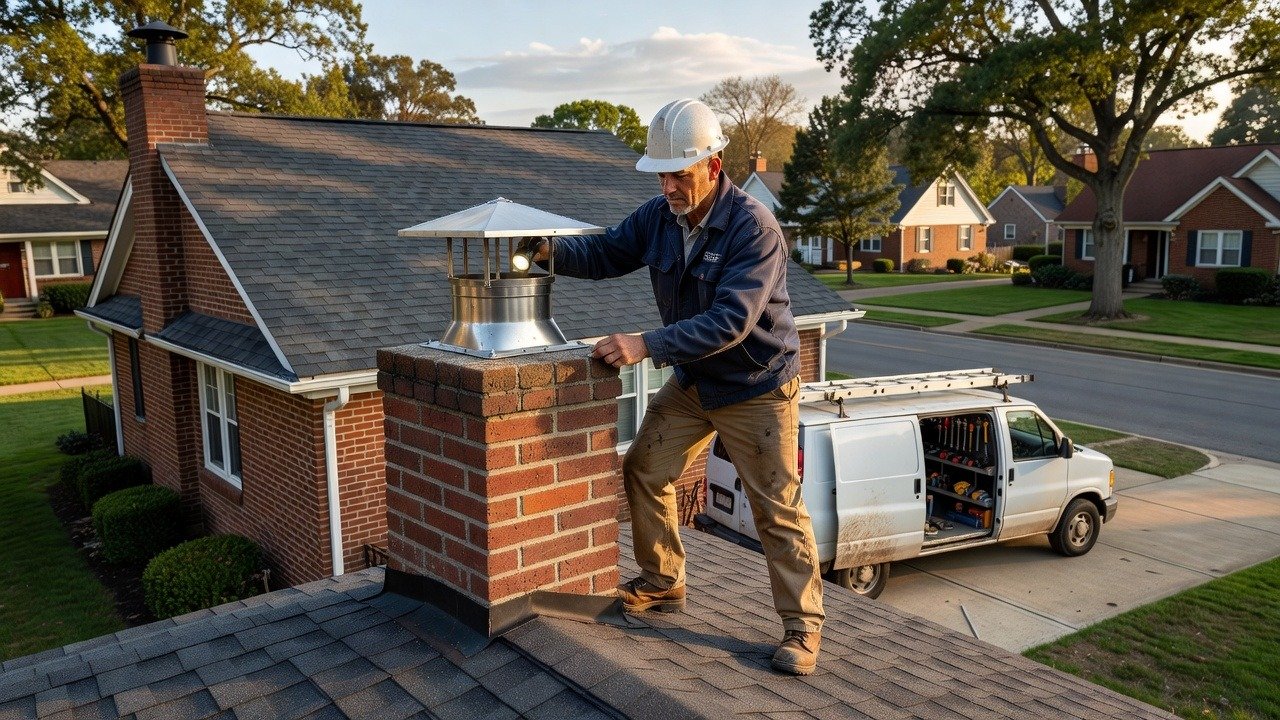
A good contractor should:
- Measure your flue
- Inspect the chimney crown
- Ask what type of fireplace or appliance you have
- Recommend the correct cap based on your system
Generic recommendations without measurements are a warning sign.
Will you inspect the chimney while installing the cap?
Replacing a cap provides an excellent opportunity to inspect:
- Chimney crown
- Top mortar joints
- Flue liner
- Masonry condition
If problems are discovered early, they’re often much less expensive to repair.
What happens if additional problems are found?
Ask how unexpected repairs are handled.
A trustworthy contractor should explain:
- How they document problems
- Whether repairs require homeowner approval
- How additional costs are communicated
No homeowner likes surprise invoices.
Is the estimate fixed or subject to change?
Request an itemized written estimate that clearly lists:
- Materials
- Labor
- Warranty
- Possible additional charges
Written estimates help eliminate misunderstandings later.
Watch for These Red Flags
Unfortunately, chimney scams remain common throughout the Northeast. Be cautious if you encounter any of these warning signs.
Door-to-door sales after storms
Some contractors appear immediately after heavy wind or rain, claiming they noticed damage from the street. Never agree to same-day repairs without obtaining another opinion.
Extremely low prices
A basic chimney cap installation in the Haddon Heights area generally costs between $200 and $600, depending on:
- Cap material
- Chimney size
- Roof access
- Crown condition
Quotes dramatically below that range often involve lower-quality materials or incomplete installations.
No written estimate
If the estimate simply says, “chimney work” or “miscellaneous labor,” ask for more detail. Professional contractors provide clear, itemized proposals.
Requests for full payment upfront
While deposits are common, paying the full amount before work begins is usually not. A reputable contractor should have an established payment process.
No proof of insurance
If a company cannot immediately provide proof of insurance, continue your search.
Stainless Steel vs. Galvanized Caps
Not all chimney caps are built the same.
Galvanized Steel
Pros:
- Lower upfront cost
Cons:
- Rusts more quickly
- Shorter lifespan
- May require replacement sooner
Stainless Steel
Pros:
- Excellent corrosion resistance
- Longer lifespan
- Better suited for New Jersey weather
- Often backed by longer manufacturer warranties
Cons:
- Higher initial cost
For most homeowners, stainless steel provides the better long-term value.
Don’t Compare Quotes by Price Alone
The lowest estimate isn’t always the best deal.
When reviewing multiple proposals, compare:
- Material quality
- Warranty coverage
- Inspection included
- Installation method
- Contractor credentials
- Customer reviews
Two estimates may appear similar until you discover one includes a complete chimney inspection while another only replaces the cap. Understanding exactly what’s included helps you compare fairly.
Read Reviews Carefully
Online reviews can provide useful insight but focus on quality rather than quantity.
Look for reviews that mention:
- Professionalism
- Communication
- Cleanliness
- Timeliness
- Long-term satisfaction
- Specific technicians
Detailed reviews are often more informative than dozens of generic five-star ratings.
Why Regular Cap Inspections Matter
Even a well-installed chimney cap should be inspected during your annual chimney service. Weather, falling branches, and seasonal temperature changes can eventually loosen fasteners or damage mesh screens.
Catching small issues early often prevents:
- Water damage
- Animal entry
- Masonry deterioration
- Expensive chimney repairs
An annual inspection helps ensure your cap continues protecting the rest of the chimney system.
Frequently Asked Questions
How much does chimney cap installation cost in Haddon Heights?
Most homeowners pay between $200 and $600, depending on the cap type, chimney size, roof accessibility, and any repairs needed before installation.
How long does a stainless-steel chimney cap last?
A quality stainless steel chimney cap can often last 20 years or longer with proper installation and routine inspections.
Can I install a chimney cap myself?
Some homeowners attempt DIY installation, but working on rooftops can be dangerous. Proper sizing, secure mounting, and inspection of the chimney crown are equally important parts of the job.
How do I know if my chimney cap needs replacement?
Common signs include:
- Visible rust
- Missing mesh
- Loose or crooked cap
- Water inside the fireplace
- Birds or animals entering the chimney
Should the chimney be inspected when replacing the cap?
Yes. Since the technician is already on the roof, it’s an ideal opportunity to inspect the chimney crown, masonry, and flue for developing problems.
Schedule a Chimney Cap Inspection Before Small Problems Become Bigger Repairs
If you’ve noticed water inside your fireplace, heard animals in the chimney, or simply aren’t sure when your chimney cap was last inspected, now is a good time to have it evaluated.
Haddon Heights Chimney proudly serves homeowners throughout Haddon Heights, Barrington, Haddonfield, Audubon, and surrounding Camden County communities with professional chimney cap installation, chimney inspections, chimney cleaning, masonry repairs, waterproofing, flashing repair, and complete chimney restoration.
Contact us today to schedule your free chimney inspection and receive an honest, detailed assessment of your chimney before minor issues become costly repairs.
Related from Haddon Heights Chimney: Chimney Sweep Cleaning Repair Haddon Heights NJ in Haddon Heights
Our services
Chimney Services in Cherry Hill, NJ · Chimney Services in Collingswood, NJ · Chimney Services in Haddonfield, NJ · Chimney Services in Audubon, NJ · Chimney Inspection · Chimney Cleaning
Areas we serve
Haddon Heights, NJ · Barrington, NJ · Glendora, NJ · Magnolia, NJ · Haddon Heights, NJ · Haddon Heights, NJ · Haddon Heights, NJ