
Published November 4, 2026
What Chimney Cap Installation in Haddon Heights Actually Costs and What Gets the Price Wrong
Many homeowners in Haddon Heights put off chimney cap installation because they assume it is either a minor expense they can handle themselves or a major project that will cost hundreds of dollars before the work even begins.
The actual cost depends on the chimney’s design, the cap material, roof accessibility, and whether the existing masonry needs attention. A standard single-flue cap is a different installation from a custom cover designed for a chimney with multiple flues.
Understanding these differences can help you compare estimates, choose the right material, and avoid paying for work your chimney does not need.
“It’s Just a Cap. How Much Could It Be?”
A chimney cap may look like a simple piece of hardware, but choosing and installing the correct one requires more than matching a product to a measurement.
For a general budgeting reference, published national estimates place chimney cap replacement at approximately $200 to $850, including the cap and installation. The actual price depends on the cap type, size, material, roof access, and whether removal of the old cap or additional work is necessary. This is not a verified Haddon Heights price survey.
Several factors influence the estimate.
Flue size and chimney configuration
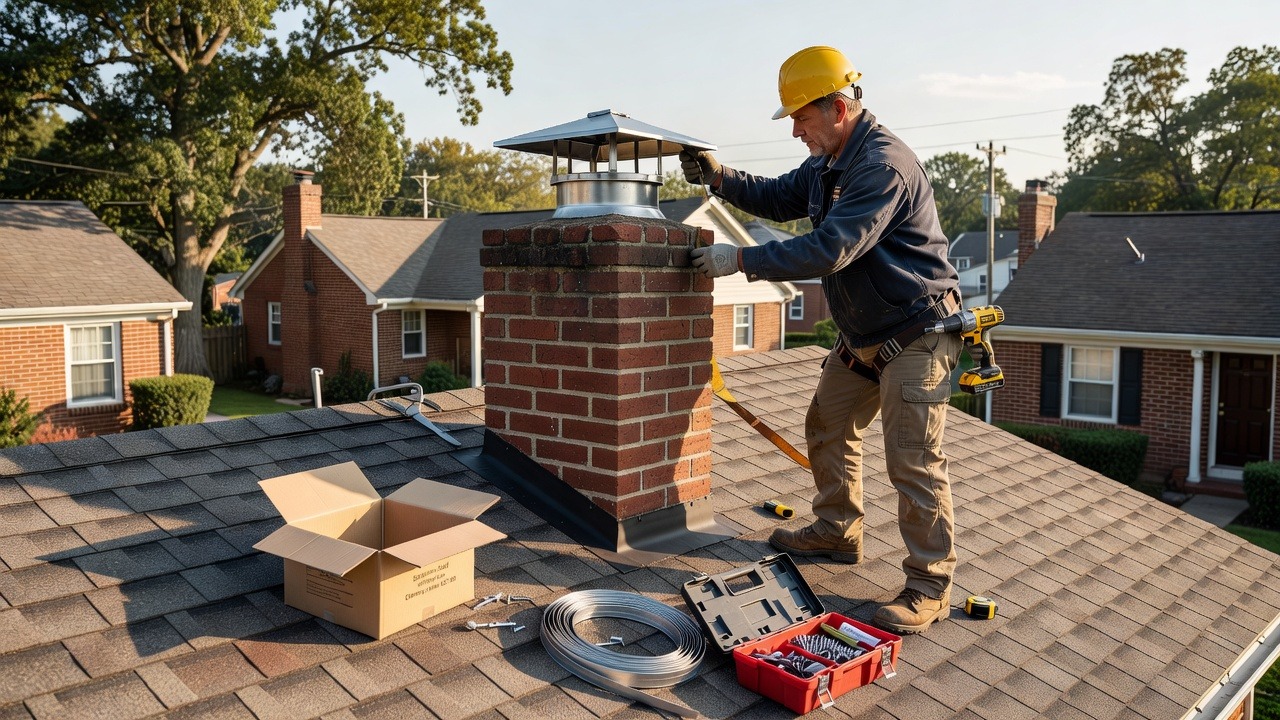
A single-flue chimney generally needs a cap designed to fit that individual flue. A chimney with multiple flues may require a larger multi-flue cover that protects the openings across the chimney crown.
Custom dimensions can increase the cost because the cap may need to be fabricated to fit the chimney’s measurements.
A contractor should measure the flue or crown before recommending a product. Buying a cap based only on the appearance of the chimney can result in an incorrect fit.
Cap material
Chimney caps are available in several materials, each with different costs and maintenance considerations.
-
Galvanized steel: Often a lower-cost option, but it may corrode over time, particularly when exposed to moisture and combustion byproducts.
-
Stainless steel: Generally offers better corrosion resistance and is a popular choice for long-term use.
-
Copper: A premium option that provides a distinctive appearance and can develop a natural patina as it ages.
The best material depends on the chimney, the appliance, the installation conditions, and the homeowner’s budget. Ask whether the manufacturer provides a warranty and what maintenance the product requires.
Roof access and installation difficulty
A cap installed on an accessible chimney with a straightforward roofline may require less labor than one on a tall chimney or steeply pitched roof.
The contractor may also need additional equipment or time if the existing cap is rusted in place, difficult to remove, or attached to a damaged surface.
These conditions can increase the labor portion of the estimate.
Existing chimney damage
The condition of the chimney matters just as much as the cap itself.
A cracked crown, deteriorating mortar, or damaged flue tile may need attention before a replacement cap can be installed properly. Those repairs should be identified and priced separately from the cap installation.
“I Can Install It Myself and Save the Labor Cost”
Some homeowners consider installing a chimney cap themselves to avoid paying for professional labor. However, working on a roof involves fall risks, and choosing the wrong cap can create problems with fit, drainage, or venting.
A professional installation also provides an opportunity to examine the chimney top and identify visible concerns.
The contractor should check the condition of the crown, flue opening, existing mounting surface, and surrounding masonry before attaching the new cap. If the inspection reveals damage, the homeowner can receive a separate repair recommendation.
This does not mean every cap installation requires a complete chimney inspection. The scope depends on the condition of the system and the work being performed. CSIA recommends that chimneys be inspected at least once a year, with cleaning and repairs performed when necessary.
If your annual inspection is overdue, it makes sense to discuss arranging one alongside the cap installation.
“Any Cap Will Fit. I Just Need to Match the Flue Size.”
Flue size is important, but it is not the only measurement that matters.
A single-flue cap must fit the outside dimensions of the flue tile or the mounting surface specified by its manufacturer. A multi-flue cap must be sized to cover the relevant openings while allowing the chimney to vent properly.
The contractor should also consider:
-
The number of flues
-
The dimensions of each flue
-
The condition of the crown or mounting surface
-
The type of appliance connected to the chimney
-
The manufacturer’s installation instructions
-
Whether a spark-arrestor screen is required
Screening is another important consideration. NFPA 211 states that screening attached to chimney or vent caps must not adversely affect draft. Where spark arresters are required, their design must also meet the applicable requirements.
A screen that is unsuitable for the chimney can restrict exhaust flow or create a maintenance problem. Ask the installer to explain why the selected cap is appropriate for your particular system.
“If the Old Cap Looked Fine, the New One Should Be Simple to Install”
The condition of an old cap can be difficult to judge from the ground.
A cap may appear intact while its mesh has rusted, its fasteners have loosened, or its metal body has deteriorated. Corrosion can be especially concerning on older galvanized components exposed to moisture and flue gases.
During replacement, the installer should examine the mounting area and check for visible damage to the chimney crown or flue opening.
If the crown has cracks or deteriorated sections, installing a new cap may not address the underlying moisture problem. The contractor should explain whether the crown needs repair before or alongside the installation.
Remember that chimney cap replacement and crown repair are different services. Ask for separate estimates so you understand what each item costs.
“A Bigger Cap Gives Better Protection”
A larger cap does not automatically provide better protection.
The cap must be designed for the chimney’s dimensions and venting requirements. An incorrectly sized or poorly designed product can interfere with exhaust flow, allow water to enter, or fail to protect the opening properly.
The right design depends on whether the chimney serves a wood-burning fireplace, wood stove, gas appliance, or another heating system.
For example, a cap intended for a masonry fireplace should not automatically be used on a different type of venting system. Listed appliances and venting components may require specific termination products installed according to the manufacturer’s instructions.
Rather than ordering the largest available cap, have the opening measured and choose a product that is suitable for the chimney and appliance.
What Should Be Included in a Chimney Cap Installation Estimate?
Before approving the work, ask the contractor to explain what the price includes.
A clear estimate should identify:
-
The cap material and product type
-
Whether it is designed for a single flue or multiple flues
-
The measurements used to select the cap
-
Removal and disposal of the existing cap, if applicable
-
Installation labor and mounting materials
-
Any necessary adjustments to the mounting surface
-
Separate charges for crown or masonry repairs
-
Product and workmanship warranty terms
Ask whether the installer will provide a photograph of the completed work. This can help document the installation, particularly when the chimney is difficult to view from the ground.
A detailed estimate also makes it easier to compare contractors. One company may quote only the replacement cap, while another may include removal, installation, and additional inspection work.
Schedule a Chimney Cap Inspection in Haddon Heights
If your chimney is missing a cap, has a damaged screen, or shows signs of corrosion, arrange an assessment before choosing a replacement.
Haddon Heights Chimney serves homeowners throughout Haddon Heights, Haddonfield, Barrington, and surrounding Camden County communities. Contact the company to ask about chimney cap installation, available materials, and current pricing.
We offer free inspections. Ask what the inspection includes and whether any recommended crown repairs, masonry work, or additional services are quoted separately.
The right chimney cap should fit the system, allow proper venting, and help protect the chimney from rain, animals, and debris. Getting the measurements and installation details right can help prevent avoidable problems later.
Related from Haddon Heights Chimney: Chimney Sweep Cleaning Repair Haddon Heights NJ in Haddon Heights · Chimney Sweep in Haddon Heights · Professional Chimney Sweep Services in Haddon Heights, NJ
Our services
Chimney Inspection · Chimney Cleaning · Chimney Repair · Chimney Sweep Mount Ephraim · Chimney Sweep Oaklyn · Chimney Sweep in Haddon Heights
Areas we serve
Barrington, NJ · Magnolia, NJ · Haddon Heights, NJ · Haddon Heights, NJ · Haddon Heights, NJ