
When to Schedule Chimney Liner Repair in Haddon Heights, NJ and What the Job Actually Looks Like
Chimney liner repair in Haddon Heights, NJ, can involve repairing a localized defect or installing a new liner inside the existing chimney. The right solution depends on the liner’s material, the extent of the damage, and the appliance it serves. Spring and summer can be convenient times to arrange non-emergency repairs, but suspected liner damage should be assessed promptly regardless of the season. Understanding the inspection process, repair options, and contractor requirements can help homeowners make informed decisions before the next heating season.
Why the Chimney Liner Matters
The flue liner helps contain combustion gases and protects the surrounding chimney structure from heat and combustion byproducts. Common liner systems include clay tile, stainless steel, and cast-in-place materials. Each has different installation requirements and potential failure points.
Cracked tiles, separated joints, corrosion, or other liner damage can compromise the chimney’s safe operation. Depending on the defect, heat and combustion gases may reach areas they should not, increasing the risk of fire or carbon monoxide exposure.
The Chimney Safety Institute of America (CSIA) recommends annual chimney inspections, with cleaning, maintenance, and repairs performed when necessary. An inspection can identify problems that are not visible from the fireplace opening or the outside of the chimney.
Older clay tile liners can develop damage over time, but the age of a home alone does not establish that its liner needs replacement. A qualified professional should assess the actual condition before recommending a repair.
Spring: A Practical Window for Non-Emergency Repairs
Spring can be a convenient time to inspect a chimney after the heating season. If the inspection identifies a damaged liner, homeowners may have time to compare proposals, confirm the appropriate repair method, and arrange the necessary work before regular fireplace use resumes.
A detailed inspection can help determine whether the damage is localized or extends across multiple sections. Depending on the findings, the contractor may recommend a suitable repair, partial replacement, or a complete relining system.
Spring scheduling also gives homeowners an opportunity to ask about permits, material availability, and the expected duration of the work.
The mistake to avoid: Assuming a damaged liner can safely remain in use until spring simply because the problem was discovered during winter. If liner damage is suspected, stop using the connected appliance until a qualified professional has assessed whether it is safe.
Summer: Another Opportunity to Arrange Liner Work
June through August can be a useful period for chimney maintenance and repairs. Homeowners can arrange inspections, compare written estimates, and plan work before the fall heating season.
However, summer does not guarantee immediate appointments or ideal installation conditions. Masonry repairs and cast-in-place liner systems must be installed according to the manufacturer’s requirements, including any applicable temperature, moisture, and curing conditions.
If your inspection reveals a damaged liner, ask the contractor when the work can be completed and how long the appliance must remain out of service. Confirm the expected schedule rather than relying on a general seasonal estimate.
The mistake to avoid: Waiting until late summer to investigate a known problem. Planning ahead can give you more time to evaluate the recommended work and address any additional repairs.
Fall: Why Early Planning Helps
September and October are common months for homeowners to prepare fireplaces and heating appliances for colder weather. This seasonal demand can affect appointment availability, although wait times vary by contractor and year.
If you schedule an inspection early, you have more time to review the findings and arrange repairs before regular use begins. This is particularly helpful if the project requires a custom-sized liner, additional masonry work, or a building permit.
If a Level 1 inspection identifies a condition that requires further investigation, the contractor may recommend a Level 2 inspection. If liner damage is confirmed, ask what must be repaired before the system can be used safely.
The mistake to avoid: Assuming that a repair discovered in October can always be completed before the first cold spell. Ask for a realistic schedule and follow the professional’s advice about whether the fireplace can remain in use.
Winter: Respond Promptly to Suspected Damage
Winter is not automatically off-limits for chimney liner work. The feasibility of a repair depends on the installation method, weather, materials, and manufacturer’s requirements.
If a chimney fire may have occurred, stop using the appliance and arrange a professional evaluation before lighting another fire. A chimney fire can damage the liner even when the exterior masonry appears intact. The CSIA advises homeowners to have the system professionally assessed after a suspected chimney fire.
If a carbon monoxide alarm sounds or you suspect combustion gases are entering your home, leave immediately and call 911 from a safe location.
The mistake to avoid: Continuing to use a chimney because the damage is not visible from the fireplace. Internal liner defects can be difficult to identify without the appropriate inspection.
What the Chimney Liner Repair Process Looks Like
The exact process depends on the condition of the existing liner and the recommended repair method. Most projects involve several stages.
1. Inspect the chimney
The contractor assesses the accessible chimney components and determines whether a more detailed inspection is needed. A Level 2 inspection includes additional accessible areas and an internal examination of the flue, typically using video scanning.
A Level 2 inspection is appropriate in circumstances such as a property transfer, a change in appliance or fuel, or an event that may have damaged the chimney. It may also be recommended when an initial inspection cannot adequately assess a suspected problem. It is not automatically required for every routine liner repair.
2. Review the findings and choose a repair method
After the inspection, ask the contractor to explain the damage, show supporting photographs or video when available, and describe why the recommended repair is suitable.
Possible options include a localized repair where an approved method is appropriate, replacing damaged sections when feasible, or installing a new liner. A full relining may be recommended when the existing system has extensive damage or cannot be restored to a suitable condition through localized work.
3. Prepare the existing flue
Depending on the selected system, preparation may include cleaning deposits, assessing obstructions, and determining whether damaged materials need to be removed. The work required varies by chimney design and liner type.
Creosote buildup should be assessed separately from structural damage. If deposits require specialized removal, the contractor should explain the cleaning method and whether it affects the repair schedule.
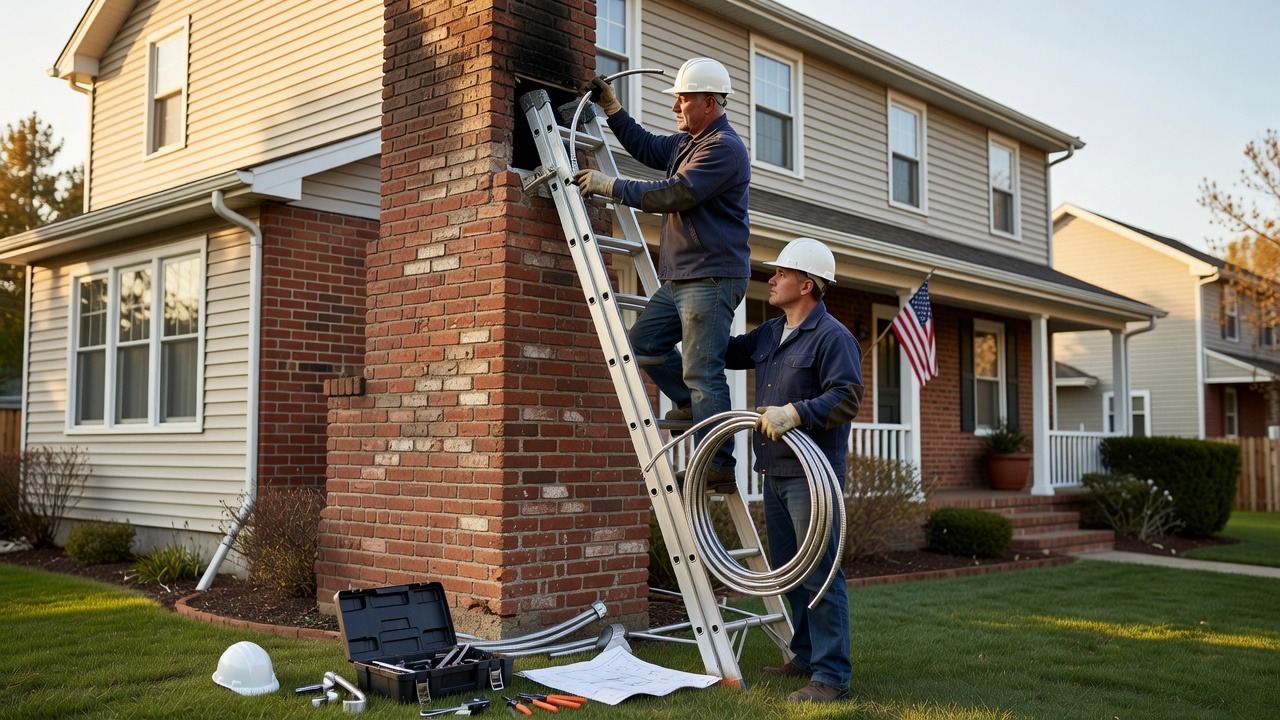
4. Install the replacement or repair system
Stainless steel relining: A suitable stainless steel liner is selected for the connected appliance and installed according to the product listing, manufacturer’s instructions, and applicable code. Flexible and rigid systems have different applications, and insulation requirements depend on the installation.
Cast-in-place relining: A specialized material is installed within the existing chimney to create a new flue lining. The method and preparation requirements depend on the product and chimney condition. Any specified curing period must be observed before the system returns to service.
Localized repair or tile replacement: When the damage is limited and the existing system remains suitable, a professional may determine that a localized repair or replacement of damaged sections is appropriate. Not every crack can be repaired this way, and the decision should be based on the inspection findings.
5. Complete the required checks
Before the fireplace or appliance is used again, confirm that the installation has been completed according to the applicable requirements. Ask for documentation identifying the installed liner system, any relevant warranty, and the inspection or approval records required for the project.
Do not assume every installation requires the same final test or that the system is ready for use immediately after work finishes. Follow the installer’s instructions and any requirements imposed by the applicable code official.
What Does Chimney Liner Repair Cost in Haddon Heights?
The cost depends on the liner material, chimney height, flue dimensions, access, preparation work, and whether additional masonry repairs are necessary. A localized repair and a full relining project can have substantially different costs.
Before approving work, request an itemized written estimate that identifies:
-
The inspection and diagnostic work.
-
The proposed liner system, material, and dimensions.
-
Required cleaning or preparation.
-
Labor and any related masonry repairs.
-
Permit fees, if applicable.
-
Warranty terms and any required follow-up inspection.
Avoid comparing estimates based on the total price alone. Two contractors may recommend different materials or scopes of work. Ask each contractor to explain the proposed solution and any exclusions so you can compare equivalent services.
Do You Need a Permit for Chimney Liner Repair in Haddon Heights?
Permit requirements depend on the scope of the project and the applicable construction code. New Jersey’s Department of Community Affairs has issued guidance explaining how replacement chimney liners in existing structures are classified under the state’s construction code.
Do not assume that every repair requires the same permit or that no permit is needed for relining. Contact the Haddon Heights Construction Office to confirm the requirements for your specific project. The borough lists its Construction Office at 625 Station Avenue and provides contact information on its official municipal website.
If a permit is required, ask the contractor who will submit the application and arrange any required inspections.
How to Choose a Chimney Liner Contractor
Before hiring a contractor, ask these questions:
What qualifications does the technician hold? If the company advertises CSIA certification, confirm that the person performing or supervising the work has the relevant current credential.
Will you document the condition of the liner? Ask whether photographs, video, or a written report will be provided when appropriate.
Why are you recommending this liner system? The contractor should explain how the proposed material and installation method address the actual damage and suit the connected appliance.
What is included in the estimate? Confirm the inspection scope, preparation, materials, labor, permits, and any additional work that may affect the total.
What warranty applies? Ask for the manufacturer’s warranty and the contractor’s labor warranty in writing. Confirm any maintenance requirements or exclusions.
Can you provide proof of insurance and relevant references? These checks can help you evaluate the contractor’s qualifications and experience.
Be cautious of pressure to approve expensive work immediately without a clear explanation of the findings. A written assessment and itemized proposal make it easier to compare options or seek a second opinion.
Prepare Your Haddon Heights Chimney Before the Next Heating Season
If your chimney liner has not been inspected recently, arrange an assessment before regular fireplace use resumes. Spring and summer can be convenient times to plan non-emergency work, but suspected damage should be evaluated promptly regardless of the season.
Haddon Heights homeowners should confirm the condition of their liner, understand the recommended repair, and verify any applicable permit requirements before authorizing work. A professional inspection and clear written estimate can help you determine what the chimney actually needs instead of guessing based on age or appearance.
Related from Haddon Heights Chimney: Chimney Sweep Cleaning Repair Haddon Heights NJ in Haddon Heights · Chimney Sweep in Haddon Heights · Chimney Repair in Haddon Heights, NJ
Our services
Chimney Services in Pennsauken, NJ · Chimney Inspection · Chimney Cleaning · Chimney Repair · Chimney Sweep Mount Ephraim · Chimney Sweep Oaklyn
Areas we serve
Magnolia, NJ · Haddon Heights, NJ · Haddon Heights, NJ · Haddon Heights, NJ · Barrington, NJ