
Don’t Ignore What Your Haddonfield Chimney Is Trying to Tell You
Most chimney fires don’t announce themselves. They start quietly inside the flue while a family is watching television or putting the kids to bed.
According to the National Fire Protection Association (NFPA), failure to clean chimneys is one of the leading contributing factors in home heating fires. In older neighborhoods like Haddonfield, where Colonial and Victorian homes often still have original or early-replacement masonry chimneys, that risk is very real.
Scheduling a professional chimney sweep before the heating season begins is one of the most effective ways to protect your home and your family.
Still, many homeowners wait until something feels wrong.
This guide explains what those warning signs actually look like, smell like, and sound like—and which ones mean it’s time to call a CSIA-certified chimney sweep immediately rather than waiting another month.
Why Seasonal Timing Matters
Haddonfield experiences a heating season that typically runs from October through March, making late summer and early fall the ideal time for chimney maintenance.
Demand for chimney sweeping throughout South Jersey increases dramatically during September and October, and appointment availability with reputable CSIA-certified companies often fills quickly.
Homeowners who delay until November may find themselves using a fireplace that hasn’t been inspected or paying premium prices for last-minute service.
In the Haddonfield area, a standard chimney sweeping and Level 1 inspection generally costs between $150 and $300, depending on chimney height, condition, and whether additional inspection services are needed.
By comparison, repairing damage after a preventable chimney fire or significant water intrusion commonly costs $1,500 to $6,000 or more.
Scheduling your inspection before October is almost always the smarter and less expensive decision.
Warning Signs You Shouldn’t Ignore
1. White Staining on the Outside of the Chimney
That chalky white residue is called efflorescence.
It develops when moisture moves through masonry and deposits mineral salts on the surface of the brick.
In many Haddonfield homes, efflorescence indicates deteriorating mortar joints, water intrusion, or a cracked chimney crown.
If ignored through another freeze-thaw winter, the damage often accelerates.
This is a sign that deserves a professional inspection.
2. Persistent Smoky or Musty Odors
A lingering smoky or musty smell inside the home especially during humid weather is often caused by creosote absorbing moisture inside the flue.
If your living room smells like a campfire long after the fireplace was last used, excessive creosote buildup may be present.
Schedule a chimney cleaning before using the fireplace again.
3. Black, Oily Deposits Around the Fireplace
Heavy black staining or oily residue around the firebox, damper, or hearth often indicates advanced creosote buildup.
Third-stage creosote is highly flammable and much more difficult to remove than ordinary soot.
If you notice this type of buildup, avoid using the fireplace until it has been professionally inspected and cleaned.
4. Cracks in the Firebox or Flue Liner
Using a flashlight, you may be able to spot cracks inside the firebox or visible damage to clay flue tiles.
Damaged liners allow excessive heat and combustion gases to escape into surrounding construction materials.
According to NFPA 211, damaged flue liners should be repaired before the fireplace is used again.
These defects are safety concerns, not cosmetic issues.
5. A Damper That Doesn’t Operate Properly
A chimney damper should open and close smoothly while forming a tight seal when closed.
A damper that sticks, won’t close completely, or allows noticeable drafts may be rusted, warped, or otherwise damaged.
Minor stiffness may simply require maintenance.
A damper that no longer seals properly should be professionally evaluated before the heating season begins.
6. Smoke Entering the Room
Occasional back drafting can happen under certain weather conditions.
However, smoke consistently entering the room whenever the fireplace is used often points to a blocked flue, poor chimney draft, or an improperly sized venting system.
It can also increase the risk of carbon monoxide entering your home.
This is not a problem homeowners should attempt to diagnose on their own.
7. Animal Activity Inside the Chimney
Haddonfield’s tree-lined neighborhoods are home to birds, squirrels, raccoons, and other wildlife that frequently enter uncapped chimneys.
Scratching sounds, chirping, rustling, or nesting material inside the fireplace all suggest the chimney should be inspected before it’s used.
Animals and nesting debris can block the flue and interfere with proper ventilation.
8. It’s Been More Than One Year Since Your Last Inspection
The Chimney Safety Institute of America (CSIA) recommends annual chimney inspections for fireplaces that receive regular use.
If you can’t remember the last time your chimney was inspected, it’s probably overdue.
Many serious chimney problems develop without obvious warning signs until significant damage has already occurred.
When to Call a Professional Immediately
Some issues shouldn’t wait.
Schedule an inspection as soon as possible if you notice:
- Efflorescence combined with deteriorating mortar
- Heavy third-stage creosote buildup
- Cracked firebox panels or damaged flue liners
- Smoke entering the home during fireplace use
- A damper that won’t fully close
- Evidence of animals or nesting inside the chimney
- More than one year since the last professional inspection
Minor surface rust or slight damper stiffness may simply require monitoring, but when there’s uncertainty, a professional inspection is always the safer choice.
A Level 1 chimney inspection is relatively inexpensive compared with the cost of repairing major chimney damage.
What to Expect During a Professional Chimney Sweep
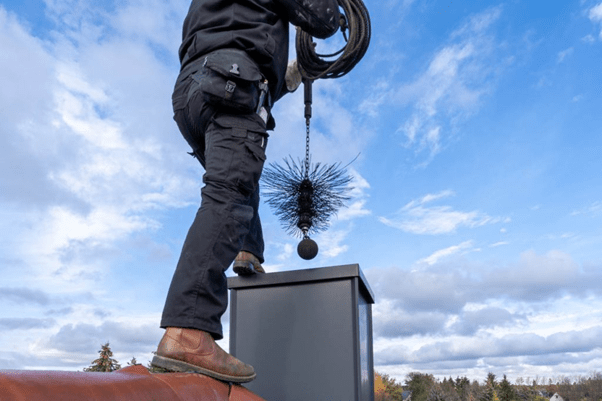
A qualified chimney technician will clean the flue from top to bottom, remove creosote and debris, and inspect the chimney liner, firebox, damper, chimney cap, and crown.
You’ll typically receive a written report documenting the condition of the system along with any recommended repairs.
If your home is located within Haddonfield’s historic district or includes an older masonry fireplace, ask the technician to pay particular attention to the condition of the flue liner.
Older chimneys without properly functioning liners present increased fire and carbon monoxide risks.
A complete inspection and chimney sweeping generally takes 45 to 60 minutes.
The same seasonal scheduling advice also applies to homeowners throughout Haddon Heights, Barrington, and neighboring Camden County communities.
Schedule Your Inspection Before Fireplace Season Begins
Haddon Heights Chimney proudly serves homeowners throughout Haddonfield and surrounding Camden County communities with CSIA-certified chimney sweeping and professional inspections.
Fall appointments fill quickly as colder weather approaches.
Schedule your free chimney inspection today. We’ll provide a thorough evaluation, explain exactly what we find, and give you a clear written report so you can enjoy your fireplace with confidence all season long.
Our services
Chimney Services in Haddonfield, NJ · Chimney Services in Audubon, NJ · Chimney Inspection · Chimney Cleaning · Chimney Repair · Chimney Sweep in Audubon
Areas we serve
Haddon Heights, NJ · Barrington, NJ · Glendora, NJ · Magnolia, NJ · Haddon Heights, NJ · Haddon Heights, NJ · Haddon Heights, NJ